




Can Tri-Clamp Ferrules Be Used for Chemical Processing? A Supplier’s Practical Breakdown
If you’ve ever worked in chemical processing, you know every component of your piping system is make-or-break. A single leak, corrosion point, or incompatible fitting can halt production, contaminate batches, or even create safety hazards. That’s why when I get asked by plant engineers and maintenance teams—often confused about mixing sanitary-grade fittings with industrial chemical processes—“Can tri-clamp ferrules actually work here?” my answer isn’t a simple yes or no. As a Sanitary Tri-Clamp Ferrule supplier who’s spent 10 years testing these fittings across food, pharmaceutical, and even specialized chemical environments, I’ve seen both game-changing wins and avoidable failures that come down to context, material choices, and matching the ferrule to the job.
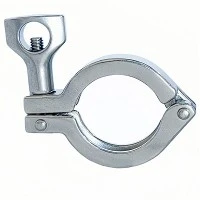
First, let’s get the basics right for anyone who’s newer to these fittings. Tri-clamp ferrules are the two round, flanged ends you weld or clamp to pipe, designed to connect via a rubber or PTFE gasket and a stainless steel clamp. The whole point is a quick, tool-free (or semi-tool-free) disassembly for clean-in-place (CIP) protocols—something standard threaded or welded fittings can’t compete with for high-sanitization needs. Traditional chemical processing often relies on butt-welded or flanged fittings that are heavy, hard to take apart, and prone to crevice corrosion that traps chemicals. So why would anyone even consider tri-clamps? Because when specs align, they solve real problems: faster changeovers for batch processing, easier line purges for sensitive chemicals, and fewer dead zones where residue builds up. But that doesn’t mean all tri-clamps work for every chemical job.
The biggest myth I hear is that tri-clamp ferrules are only for sanitary industries like beer, cosmetics, or over-the-counter pharmaceuticals. That’s partially true—most of our daily business is with those sectors—but I’ve also worked with teams handling mild acids, bases, and even some specialty chemical blends for lab-scale and semi-production runs. The non-negotiable here is material grade. For chemical processing, you can’t grab the same 304 stainless steel tri-clamp you use for soda lines and expect it to hold up to hydrochloric acid or caustic soda. 304 is great for water, mild salts, and dilute non-oxidizing acids up to about 150°F, but anything stronger—like 10% sulfuric acid at ambient temperature—will cause pitting corrosion on 304 in weeks. That’s why we always push customers to upgrade to 316L stainless steel for chemical applications: its higher molybdenum content makes it resistant to pitting and crevice corrosion in chloride-rich and acidic environments, which are common in many chemical lines.
Material isn’t the only piece of the puzzle. The ferrule’s design matters too. Regular tri-clamp ferrules have a straight outer flange that presses against the gasket, but for chemical processing, you might need crimp ferrules, which are crimped onto pipe ends for extra pressure resistance. I once had a customer in a specialty chemical lab try to use standard tri-clamps for a 150 psi acid transfer line—they started leaking within 48 hours because the standard ferrule’s flange couldn’t handle the pressure differential. Swapping in Stainless Steel Crimp Ferrule from our catalog fixed that immediately; the crimped design distributes pressure evenly across the pipe and fitting, making it suitable for higher-pressure chemical transfers where safety is non-negotiable.
Another common question is connecting tri-clamp ferrules to existing chemical piping systems. Most plants already have a mix of pipe sizes, so adapters and reducers are essential here. For example, if you’re moving from a 2-inch Schedule 40 carbon steel pipe (common in many chemical facilities) to a 1.5-inch sanitary tri-clamp line, you need a reducer stainless that transitions between those sizes seamlessly. The key here is ensuring the reducer is made from the same corrosion-resistant grade as your tri-clamp ferrules—mismatched materials create galvanic corrosion, which is a silent killer in chemical piping. I’ve seen customers skip this step and end up with pinhole leaks at the reducer-ferrule junction, forcing them to shut down lines for repairs during peak production.
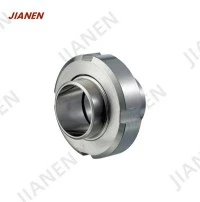
What about connecting tri-clamp ferrules to threaded or flanged pipe? For that, you need adapters that keep the seal intact and compatible with chemicals. Take our Sanitary 22MP Male Clamped Adaptor—this is perfect for linking tri-clamp lines to male-threaded piping, a common need when retrofitting tri-clamp systems into older chemical plants that don’t have tri-clamp-ready pipe. The adaptor’s stainless steel construction and precision threading ensure there’s no gap where chemicals can get trapped, which is critical for CIP. If you’re connecting two tri-clamp lines with different end types, an ss union coupling lets you join them without welding, which saves time during installation and future maintenance.
Now, let’s get real about where tri-clamp ferrules aren’t a good fit. I’d never recommend them for high-temperature, high-pressure chemical processing that exceeds 300 psi or 450°F. That includes things like refining crude oil or producing concentrated corrosive chemicals at elevated temperatures—for those, standard flanged or butt-welded fittings designed for industrial process piping are still the only reliable option. Tri-clamps also fall short in applications where chemicals will etch or degrade even stainless steel, like concentrated nitric acid or hydrofluoric acid. For those, you’d need specialized lined piping (like PTFE-lined steel) that tri-clamp ferrules can’t accommodate without risking liner failure.
But here’s where tri-clamps shine in chemical processing: batch chemical production, where you need to switch between different product formulas and clean lines thoroughly between runs. I worked with a customer who made specialty cleaning solutions for the manufacturing industry—they were using welded lines that took 8 hours to disassemble, clean, and reassemble between batches. Swapping in our stainless steel tri-clamp ferrules and Stainless Steel Pipe Connectors cut that changeover time to 45 minutes, because they could just unclamp the line, take apart the union, and purge any residual chemical before switching to the next formula. That boosted their production output by 22% in the first month, no small feat for a small-to-mid-sized chemical plant.
Another benefit many chemical teams overlook is traceability. When handling chemicals that need to be documented for regulatory compliance (like EPA or OSHA standards), tri-clamp ferrules made from certified 316L stainless steel are easy to track. Every batch of our tri-clamps comes with material test reports, so you can prove to auditors that your fittings are compatible with the chemicals you’re processing—something harder to do with generic industrial fittings.
I also want to address a concern I hear a lot: gasket compatibility. Even the best ferrule is useless if the gasket fails. For chemical processing, you can’t use the standard EPDM gaskets you use for dairy lines. You need gaskets made from PTFE, Viton, or Kalrez—materials that resist chemical degradation and won’t leach into your product. We work with customers to recommend the right gasket for their specific chemical blend, and we always advise testing a small sample before full installation, especially for new or untested chemical combinations. That’s a step too many plants skip, and it leads to gasket failure, product contamination, and costly downtime.
Let me share a cautionary tale to drive this home. A few years ago, a mid-sized chemical plant called us in a panic. They’d installed standard 304 tri-clamp ferrules to connect their dilute sodium hydroxide lines, and after three months, they had leaks in multiple fittings. When we inspected, we found the 304 stainless steel was corroding from the sodium hydroxide, which is a mild base but still aggressive to 304 over long-term exposure. We replaced all their ferrules with 316L tri-clamps, recommended PTFE gaskets, and added reducers where they’d mismatched pipe sizes. They haven’t had a leak related to fittings in over four years, and they even expanded their tri-clamp line to include another processing unit because of the reliability.
So to circle back to the original question: can tri-clamp ferrules be used for chemical processing? The answer is yes, but only when you select the right grade of material, pair them with compatible adapters and fittings like reducer stainless, ss union coupling, and Stainless Steel Crimp Ferrule when needed, and use chemical-resistant gaskets for your specific application. They’re not a one-size-fits-all solution—they won’t work for every chemical process—but when matched to the right use case, they offer benefits that traditional fittings can’t: faster maintenance, easier CIP, lower risk of residue buildup, and regulatory compliance.


If you’re a chemical processing plant looking to retrofit or install a tri-clamp system, or if you’re not sure whether tri-clamp ferrules are right for your specific application, our team can help. We work with small lab teams to large-scale chemical manufacturers, providing custom sizing, material recommendations, and technical support to ensure your piping system is both efficient and safe. Don’t let outdated fitting choices slow down your production or put your product at risk—reach out to our team to discuss your project needs and find the right tri-clamp solutions for your chemical processing operations.
References
- ASME BPE-2022: Bioprocessing Equipment Standard. American Society of Mechanical Engineers.
- Stainless Steel Corrosion Resistance Chart. Nickel Institute.
- Sanitary Piping Systems for Chemical and Pharmaceutical Processing. Parr Instrument Company, 2021.
- Pressure and Temperature Ratings for Tri-Clamp Fittings. Tri-Clover, Inc., 2020.
- Gasket Selection Guide for Chemical Processing. DuPont Performance Elastomers, 2022.