


Hey there! As a supplier of stainless steel tubes, I often get asked about the wall thicknesses of large-sized stainless steel tubes. So, I thought I'd share some insights on this topic in today's blog post.
First off, let's talk about why wall thickness matters. The wall thickness of a stainless steel tube plays a crucial role in determining its strength, durability, and performance. A thicker wall generally means the tube can withstand higher pressures, more stress, and is less likely to deform or break. On the other hand, a thinner wall might be more cost - effective and suitable for applications where high strength isn't the primary concern.
Now, when it comes to large - sized stainless steel tubes, the wall thickness can vary quite a bit depending on several factors. One of the main factors is the application. For example, if the tube is going to be used in a high - pressure fluid transportation system, like in an oil refinery or a chemical plant, you'll need a tube with a relatively thick wall. These tubes need to be able to handle the high internal pressures without leaking or bursting.
Another factor is the type of stainless steel. Different grades of stainless steel have different mechanical properties. For instance, austenitic stainless steels, such as 304 and 316, are known for their good corrosion resistance and formability. They can be used in a wide range of applications, and the wall thickness can be adjusted according to the specific requirements. Ferritic stainless steels, on the other hand, are often used in applications where high temperature and corrosion resistance are needed, and the wall thickness might be chosen based on the temperature and corrosion environment.
The manufacturing process also has an impact on the wall thickness. There are two main ways to manufacture stainless steel tubes: seamless and welded. Seamless tubes are made by piercing a solid billet, which gives them a more uniform wall thickness and better mechanical properties in some cases. Welded tubes, as the name suggests, are made by welding a flat strip of stainless steel into a tube shape. You can check out more about Stainless Steel Welded Tube on our website.
For large - sized seamless tubes, the wall thickness can range from about 3mm to 50mm or even more. Smaller large - sized tubes might have a thinner wall, around 3 - 10mm, which are suitable for applications like structural support in buildings or some low - pressure fluid systems. Medium - sized large tubes could have a wall thickness of 10 - 25mm, and these are often used in industrial piping systems. Larger large - sized tubes, say those with a very big diameter, might have a wall thickness of 25 - 50mm or more. These are typically used in heavy - duty applications such as high - pressure pipelines in the energy sector.
When it comes to welded tubes, the wall thickness can also vary. Generally, welded tubes can have a wall thickness starting from around 1mm for thinner - walled applications, like in some decorative or low - stress applications. For more heavy - duty applications, the wall thickness can go up to 20mm or more. You can find a wide range of stainless steel tubing options on our site.
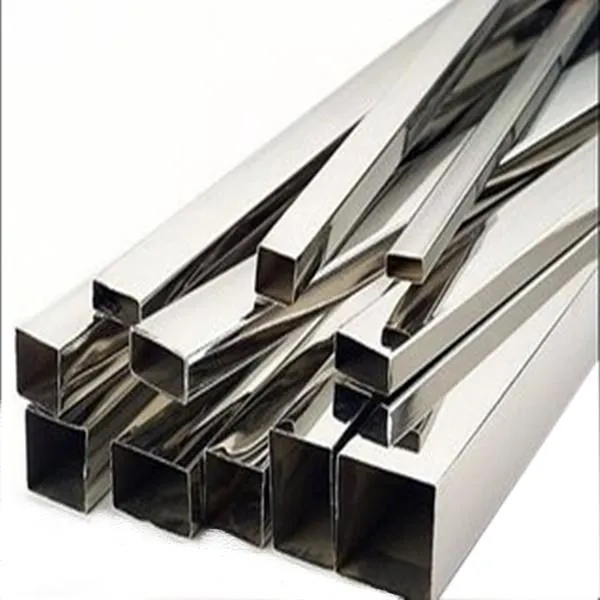
Square - shaped large - sized stainless steel tubes, also known as square pipe, have their own set of wall thickness requirements. Square pipes are often used in structural applications, like in the construction of frames for buildings, machinery, or furniture. The wall thickness of square pipes can range from 2mm to 15mm or more. Thinner - walled square pipes are suitable for light - duty structures, while thicker - walled ones are used for heavy - duty and load - bearing structures.
It's important to note that the wall thickness isn't the only thing you should consider when choosing a stainless steel tube. You also need to look at the outer diameter, the surface finish, and the overall quality of the tube. For example, a tube with a smooth surface finish might be more suitable for applications where hygiene is important, like in the food and beverage industry.
In addition, we need to think about the standards and specifications. There are international standards, such as ASTM (American Society for Testing and Materials) and EN (European Norm), which define the acceptable wall thicknesses, dimensions, and other properties of stainless steel tubes. When you're purchasing large - sized stainless steel tubes, make sure they meet the relevant standards for your application.
As a supplier, we have a team of experts who can help you choose the right wall thickness for your specific needs. We understand that every project is unique, and we're here to provide you with the best solution. Whether you need a tube for a small - scale DIY project or a large - scale industrial application, we've got you covered.
If you're in the market for large - sized stainless steel tubes, don't hesitate to reach out to us. We can offer you a wide range of options in terms of wall thickness, diameter, and grade of stainless steel. We'll work with you to understand your requirements and provide you with a quote that fits your budget.
In conclusion, the wall thickness of large - sized stainless steel tubes depends on many factors, including the application, type of stainless steel, manufacturing process, and standards. By understanding these factors, you can make an informed decision when choosing the right tube for your project.
So, if you have any questions or are interested in purchasing stainless steel tubes, just drop us a message. We're looking forward to working with you and helping you find the perfect tubes for your needs.

References:
- ASTM International Standards for Stainless Steel Tubes
- European Norm (EN) Specifications for Stainless Steel Tubes
- Industry Publications on Stainless Steel Tube Manufacturing and Applications