



When selecting between welded and clamped butterfly valves, it's essential to consider their specific applications and connection methods. In everyday applications, sanitary butterfly valves are widely utilized for fluid flow regulation in sanitary systems. However, their usage characteristics vary significantly depending on their connection type.

Welded Butterfly Valves
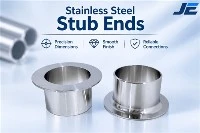
A welded butterfly valve is a type of butterfly valve where the valve body is welded directly to the pipeline. Its primary characteristics include a compact structure and the absence of additional joints, which significantly reduces the potential for leakage. This type of butterfly valve is particularly suitable for high-pressure and high-temperature environments, as the welded connection provides exceptional strength and sealing performance.
The welded construction eliminates crevices and gaps, preventing bacterial growth and making them ideal for sanitary applications.
Welded connections provide a permanent, leak-proof seal, ensuring maximum containment of fluids.
Without flanges or gaskets, these valves have fewer components that require maintenance or replacement.
Despite higher initial costs, they offer better long-term value due to reduced maintenance and longer service life.
Typically polished to a high Ra value (usually <0.8μm), they minimize product adhesion and facilitate easy cleaning.
Can withstand repeated CIP/SIP processes and various sterilization methods.
These features make sanitary welded butterfly valves particularly suitable for industries requiring strict hygiene standards, such as food and beverage, pharmaceutical, and biotech applications.
Clamped Butterfly Valves
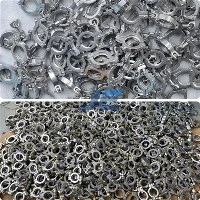
The clamped butterfly valve utilizes a clamped connection to secure the valve body to the pipeline. It employs bolts and nuts to fasten the two main components together, creating a tight and secure joint.
- Quick and simple installation process
- Easy disassembly for cleaning and inspection
- No special tools or welding required
- Allows for easy reconfiguration of piping systems
- Facilitates component replacement or upgrades
- Suitable for temporary or experimental setups
- Lower initial installation costs compared to welded valves
- Reduced labor costs for installation and maintenance
- Cost-effective for systems requiring frequent modifications
- Tri-clamp connections meet sanitary standards
- Smooth surface finish (typically Ra < 0.8μm)
- Suitable for CIP/SIP cleaning processes
- Available in various grades of stainless steel (304/316L)
- Compatible with different gasket materials for various applications
- Suitable for a wide range of temperatures and pressures
- Compatible with various pipe sizes and configurations
- Suitable for multiple industries (food, pharmaceutical, biotechnology)
- Adaptable to different process requirements
These advantages make sanitary clamped butterfly valves particularly suitable for applications requiring frequent maintenance, system modifications, or where flexibility in process design is essential.