

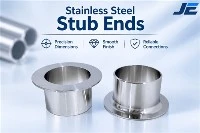


In the field of semiconductor or liquid crystal display manufacturing, device integration has increased in recent years. In the manufacture of a device called a very large scale integrated circuit, a fine pattern of 1 micron or less is required. In such a manufacturing process, fine dust or a very small amount of gas impurities are deposited or adsorbed on the wiring pattern, resulting in circuit failure. Therefore, it is necessary that both reaction gas and carrier gas with high purity, that is, only a few particles and gas impurities, can exist in these gases. For this reason, it is necessary for a stainless steel capillary tube or a member to use such a gas with high purity, and its internal surface is used as a pollutant to emit pollutants, with only a minimum amount of particles and gas. In addition to inert gases such as nitrogen and argon, many gases called specialty gases are also used as gases for manufacturing semiconductors. Examples of specialty gases include corrosive gases such as chlorine, hydrogen chloride and hydrogen bromide, and chemically unstable gases such as silage. The former requires gas corrosion resistance, while the latter requires non-catalytic performance.
So far, in order to reduce the deposition or adsorption of dust or water, the inner surface of the part used to manufacture semiconductor gas has been smoothed until its Rmax surface roughness is 1 micron or less. Cold drawing, mechanical polishing, chemical polishing, polishing, or a combination thereof can be used as a method for smoothing the inner surface or parts of the pipe. However, a highly smooth material with a value of 1 micron or less is mainly obtained by electrolytic polishing. The internal surface of the pipe or similar is smoothed, then cleaned with high-purity water and dried with high-purity gas to obtain the final product.
Welding is generally used when welding. This is because welding can ensure high strength and good air tightness of the pipeline. In laying pipelines, high-purity inert gas, usually argon, is used as a protective gas, and its internal surface is contacted with high-purity gas through the pipeline to avoid heating a part of pollution and oxidation to high temperatures as much as possible. In addition, in the pipeline laying, the pipeline is cleaned with high-purity argon or nitrogen to remove these particles and still remain in the pipe. When the pipeline is long and complicated, such as a pipeline, it takes several days to several weeks. Recently, cost reduction in the construction of a semiconductor manufacturing plant and the early operation of the plant has been strongly demanded. In order to meet these requirements, it is now necessary to shorten the cleaning time.
In addition to the above properties, the pipe and high-purity gas members need to have welding capabilities, the joint area required for mechanical seals, and wear resistance; when parts such as joints are machined, Mach weakness is required. On the other hand, it has been known that special gases with corrosion resistance and non-catalytic properties, which are required for manufacturing semiconductor pipes or similar gases, can be improved by heating the surface of stainless steel in such a way Atmosphere, in such an atmosphere, the partial pressure of oxygen is controlled. It is worth noting that the objective substance of the pipeline is reported as SUS 316L stainless steel in this literature.
The above-mentioned required corrosion resistance and non-catalytic performance are not only for gas pipelines. The same demand is also made of stainless steel used in various equipment for manufacturing semiconductors, one of which has fine wafer processing. Austenitic stainless steel, in particular, SUS 316L type is mainly used as a material for pipes and other equipment members. Japanese Kokai Patent Publication No. 161145/1988 discloses a non-standard high-clean austenitic stainless steel of steel pipes used in clean rooms. Non-metallic inclusions limit the reduction of manganese, silicon, aluminum, and oxygen content, thereby reducing the generation of particles from the inner surface of the pipeline.
In addition, Japan published Patent Publication No. 198463, 1989/, which discloses a stainless steel member for equipment for manufacturing semiconductors. These members are oxidizing gas after electrochemical polishing of stainless steel. Under certain conditions, an oxide layer with a thickness of 100 to 500 angstroms is formed on it and heated in such a way that the number of Ni atoms in the outer part is Proportion