

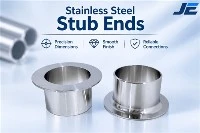

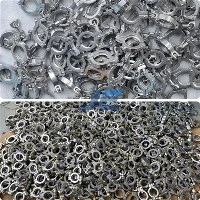

The most common pipe fittings mainly include the following categories according to their functions and uses. The following will be summarized in detail and explained in points.
1. Pipe fittings that change the flow direction
Elbow
Purpose: used to change the direction of the pipeline.
Type: Common ones are 45° elbows, 90° elbows and 180° elbows.
Material: Stainless steel elbows have excellent corrosion resistance and are suitable for a variety of fluid transportation.
Tee
Purpose: used to branch a pipeline into two pipelines.
Type: divided into equal-diameter tees and reducing tees.
Application: to achieve fluid diversion or confluence in the pipeline system.
Four-way
Purpose: used to achieve cross-connection of four pipelines.
Features: The structure is relatively complex, but it can meet more complex pipeline layout requirements.
2. Pipe fittings for connecting pipelines
Flange
Purpose: used for connection between pipelines and pipelines, pipelines and equipment.
Type: including flat welding flanges, butt welding flanges, etc.
Features: firm connection, good sealing, suitable for harsh working conditions such as high pressure and high temperature.
Threaded joint
Purpose: Connect two sections of pipes by threads.
Features: Easy to install, suitable for low-pressure, small-diameter pipes.
Welded joint
Purpose: Connect two sections of pipes by welding.
Type: Including butt welding, fillet welding, etc.
Features: High connection strength and good sealing, but the welding quality has a greater impact on the performance of the pipe fittings.
Compression joint
Purpose: Connect by compressing the seal between the pipe fittings and the pipe.
Features: Quick installation, no welding required, suitable for thin-walled stainless steel pipes.
3. Pipe fittings for controlling fluids
Valve
Purpose: Used to open or close the pipeline and adjust the flow.
Type: Including stop valve, ball valve, gate valve, butterfly valve, etc.
Features: Valves are indispensable control elements in the pipeline system and can achieve precise control of the fluid.
Blind plate
Purpose: Used to close the end or branch of the pipeline to prevent fluid leakage.
Features: Often used in pipeline maintenance and overhaul.
Pipe cap
Purpose: Installed at the end of the pipeline to play a sealing role.
Features: Simple structure and easy installation.
IV. Other special pipe fittings
Reducers (large and small heads)
Purpose: used to connect pipes of different diameters to enable a smooth transition of the pipeline system.
Compensator
Purpose: used to compensate for the expansion and contraction of the pipeline due to temperature changes and prevent the pipeline from being damaged by thermal stress.
Supports and hangers
Purpose: used to support and fix the pipeline to ensure the stable operation of the pipeline system.