


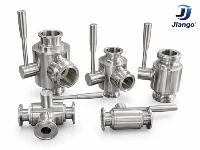
When flow control fails, its core functions (such as fluid distribution, flow regulation, pressure balancing, etc.) are directly affected, which may lead to system efficiency reduction, equipment damage and even safety hazards. Specific symptoms and consequences depend on the type of flow control valve and its application. Here are the details:
I. Common Flow Control Valve Failures and their symptoms
1.Leak
Internal Leak: Poor seal between valve core and seat, causing fluid to leak from the high to the low pressure side.
Symptoms: inadequate output bypass flow, fluctuating system pressure, increased energy consumption.
For example, in a hydraulic system, an internal leak in a flow control valve may cause multiple cylinders to move inconsistently or not even function.
External Leak: Damage to valve body connections (e.g. flanges, threads) or seals (e.g. O-rings) resulting in leakage of liquid into the environment.
Symptoms: Oil or water stains on site; potential environmental contamination or fire hazard (e.g., fuel oil leak).
For example, in chemical pipelines, leaking corrosive liquids can corrode equipment foundations or endanger personal safety.
2.Adhesion or blockage
Core adhesion: foreign body (such as metal particles, oil residue) into the valve body, hindering the movement of the valve core.
Symptoms: flow control valve donot regulate flow or direction, and the system is unresponsive or not working properly at all.
In agricultural irrigation system, for example, silt flow control valve may prevent some sprinklers from producing water.
Solid particles or crystalline substances on which liquids are deposited to limit movement.
Symptoms: Decreased output flow and abnormally high system pressure.
In seawater desalination system, for example, salt crystallization can block flow control valve and affect water use efficiency.
3.Uneven Flow Ratio
Fault of fixed ratio flow control valve: valve core wear or spring failure, change the preset flow ratio.
Symptoms: uneven distribution of multiple tributaries affects process stability.
For example, in a chemical reactor, an imbalanced raw material ratio may lead to a decrease in product quality or side reactions.
Fault of adjustable ratio flow control valve: Damages adjustment mechanism (such as handle, electric actuator), obstructs flow adjustment.
Symptoms: The system doesnot adapt to changing operating conditions, resulting in reduced efficiency. Case study: Uncontrolled flow ratios may affect repeatability of experimental results in laboratory liquid dispensing systems.
4.Abnormal Pressure
Pressure Imbalance: flow control valve cannot maintain the same pressure between multiple branches, resulting in excessive pressure difference.
Phenomenon: vibration of equipment, increased noise, premature seal failure.
Case study: In a hydraulic synchronization circuit, pressure imbalance will lead to uneven cylinder load, which will lead to mechanical failure.
Pressure Fluctuations: Insufficient response speed of flow control valve or excessive flow in the system, will lead to frequent variations in pressure.
Phenomenon: Pipe vibration, gauge readings instability, equipment lifespan shorter.
Case study: In gas transmission system, pressure fluctuations can lead to irregular movement of safety valves and interruption of gas supply.
V. Noise and vibration
Gas eclipse or vaporization: A sudden drop in pressure that causes bubbles to form and burst (gas eclipse), or vaporization when a liquid passes through restricted airflow.
Phenomenon: Flow control valve makes a shrill noise, valve body surface point corrosion.
Case study: In a steam system, vaporization can lead to rapid valve seat wear.
Mechanical vibration: The core is blocked or the rate pulsations, causing valve body to vibrate.
Phenomenon: loose pipe connections, valve body cracking.
Case study: In high pressure water jet cutting system, flow control valve vibration can lead to pipe leaks.
ii. Consequences of Flow Control Valve Failure
1.Reduced System Efficiency
Insufficient Flow: Lower Output flow rate than designed, resulting in slow operation of equipment or reduced production capacity.
Case study: In the production line, the hydraulic flow control valve malfunctions, which may delay the movement of the robot arm and reduce production efficiency.
Increased energy consumption: Internal leakages or pressure fluctuations require pumps to work harder, increasing energy consumption.
Case study: If the cooling water flow control valve in the air conditioning system fails, it may lead to frequent circulation of compressor and increase power consumption.
2.Equipment Damage
Mechanical wear: Bearing, gear and so on due Pressure imbalance or vibration increase and premature failure.
Case study: In construction machinery, faulty hydraulic fluid flow control valve can cause cylinder seals to break and the entire hydraulic system requires to be replaced.
Heat damage: Insufficient flow leads to poor heat dissipation, causing overheating.
Case study: in the generator set, the blockage of cooling water flow control valve can lead to engine block cracking. Security risks
Leaks causing fires/explosions: Leaks of flammable liquids (e.g. fuel oil, natural gas) may be ignited on open fires or hot surfaces.
For example, a leakage in a gas distribution valve in a gas a fuel station's pipeline can cause gas to accumulate and lead to an electrostatic explosion.
Toxic substance leakage: In chemical systems, the release of corrosive or toxic liquids can endanger human health.
For example, in chlor-alkali production, valve seal failure can lead to chlorine gas leakage, leading to poisoning incidents.
4. Process control issues
Decrease in product quality: Imbalanced flow rate or proportion affects reaction conditions, resulting in substandard products.
In the pharmaceutical industry, for example, failures in the dielectric distribution valve can affect cell growth and reduce the effectiveness of vaccines.
Production downtime: Severe malfunction requires downtime, causing economic loss.
In semiconductor manufacturing, for example, faulty ultra-pure water distribution valves can interfere with wafer cleaning and stall entire production lines.
III. Troubleshooting and remediation
1. Diagnosis
Visual inspection: check for leaks, meter readings and pressure gauge fluctuations.
Aural inspection: Abnormal noises may indicate cavitation, vibration or disturbance.
Touch check: Overheating valve body body body may indicate internal leakage or poor heat dissipation.
Instrument test: use ultrasonic leak detectors, flowmeter or pressure sensors to determine fault location.
2.Remediation Measures
Emergency shutdown: If a fault causes a safety hazard (such as leakage or overheating), shut off the system immediately and isolate distribution valve.
Wash and maintain: Clean valve body regularly and replace filters or seals.
Calibration and adjustment: recalibrate the flow ratio of adjustable proportional distribution valves.
Spare parts replacement: Replace badly worn or damaged components, such as valve cores and springs.
3. Preventive measures
Selection of high quality valves: Corrosion and high pressure resistant materials (e.g. stainless steel, hardenite) according to the conditions of use.
Install filters: Install filters upstream of distribution valve to prevent impurities from entering.
Periodic inspection: make maintenance plan, check seals, pressure gauges and flowmeters.
Operator training: Ensure operators are familiar with the operation and safety precautions of distribution valve. IV. INTRODUCTION I. INTRODUCTION 1 -6 2
Failure of bypass valve can lead to a series of chain reaction, from efficiency to safety incidents, the extent of impact depends on the type of system and the severity of the failure. Regular maintenance, real-time monitoring and rapid response can effectively reduce the risk of failure and ensure stable operation of the system. Redundant design or backup valves are recommended for critical applications such as chemical processing, energy and aerospace to improve system reliability.
What Happens When The Bypass Valve Malfunctions?
Sep 10, 2025 Leave a message
Send Inquiry