


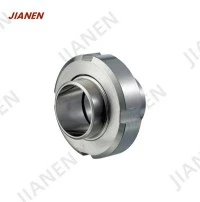


Hey there! I'm a supplier of Stainless Steel Weld Unions, and I know how crucial it is to pick the right size for your project. It's not just about getting something that fits; it's about ensuring the whole system runs smoothly and efficiently. So, let's dive into how you can choose the perfect size for your stainless steel weld union.
Understanding Your System Requirements
First things first, you gotta understand your system. What's it for? Is it a water supply system, a chemical processing setup, or maybe something for food and beverage production? Different applications have different demands. For instance, a food and beverage system needs sanitary pipe fitting that meet strict hygiene standards. You can check out sanitary pipe fitting on our website to get an idea of what's available.
Think about the flow rate. How much fluid or gas needs to pass through the system? A higher flow rate usually means you'll need a larger diameter weld union. Pressure is another key factor. High-pressure systems require stronger and often larger weld unions to handle the force without leaking or bursting.
Measuring the Existing Pipes
If you're replacing an old weld union or connecting new parts to existing pipes, measuring is essential. You need to know the outer diameter (OD) and wall thickness of the pipes. Most stainless steel pipes are specified by their OD. For example, a 1-inch pipe doesn't mean the inside diameter is 1 inch; it's the outside measurement.
Use a caliper or a measuring tape to get accurate readings. Make sure to measure at multiple points along the pipe to account for any irregularities. If the pipe has a beveled end, note that down too, as it can affect the type of weld union you choose. Some weld unions, like Bevel Seat Fittings Weld X Thread Ferrule, are designed to work with beveled pipes.
Considering the Pipe Material
The material of your pipes matters. While we're dealing with stainless steel here, not all stainless steels are the same. Different grades have different properties, such as corrosion resistance and strength. You want to make sure the weld union is made from a compatible grade of stainless steel. For example, if your pipes are made of a high-grade stainless steel for a corrosive environment, the weld union should be too.
Also, think about the finish of the pipe. A smooth finish might be required for applications where cleanliness is a priority, like in the pharmaceutical or food industries. Our stainless steel weld unions come in various finishes to match different pipe requirements.
Fitting Types and Their Sizes
There are different types of stainless steel weld unions, and each type has its own size considerations. Socket weld unions are popular because they're easy to install and provide a strong connection. They come in a range of sizes to fit different pipe diameters.
Butt weld unions are another option. They offer a more seamless connection, which can be important for applications where there can't be any turbulence in the flow. When choosing a butt weld union, you need to make sure the size matches the pipe's outer diameter precisely.
Future Expansion and Flexibility
It's always a good idea to think about the future. Will you need to expand your system later? If so, it might be worth choosing a slightly larger weld union than you currently need. This way, you won't have to replace the whole thing if you want to increase the flow rate or add more components.
Also, consider the flexibility of your system. If you might need to make changes or repairs in the future, choose a weld union that's easy to access and replace. Some types of weld unions are more modular and can be swapped out without too much hassle.


Compatibility with Other Components
Your weld union doesn't work in isolation. It needs to be compatible with other components in the system, like valves, pumps, and stainless pipe elbows. Make sure the sizes and connection types match up. For example, if you're using a threaded valve, you'll need a weld union with a compatible thread size.
Checking Industry Standards
There are industry standards for stainless steel weld unions, and it's important to follow them. Standards ensure that the weld union will perform as expected and meet safety requirements. Look for weld unions that are certified to meet relevant standards, such as ASTM or ASME.
Consulting with an Expert
If you're still not sure which size of stainless steel weld union to choose, don't hesitate to consult with an expert. As a supplier, we have a team of knowledgeable folks who can help you make the right decision. We've seen all sorts of applications and can offer advice based on our experience.
Making the Final Decision
Once you've considered all these factors - system requirements, pipe measurements, material, fitting types, future expansion, compatibility, and industry standards - it's time to make the final decision. Choose a size that meets your current needs and leaves room for future changes.
Remember, getting the right size of stainless steel weld union is crucial for the success of your project. A well-chosen weld union will ensure a leak-free, efficient, and long-lasting system.
Contact Us for Your Purchase
If you're ready to buy a stainless steel weld union or have more questions about sizing, we're here to help. Our team can assist you in finding the perfect size and type for your application. Just reach out to us, and we'll start the conversation about your project.
References
- ASME B31.3 Process Piping Code
- ASTM Standards for Stainless Steel Pipe Fittings