


As a supplier of stainless steel tubes, I often get asked about the UV-resistance properties of our products. In this blog post, I'll delve into the science behind stainless steel's performance against UV radiation, explore how different factors can influence this resistance, and discuss why our stainless steel tubes are a great choice for various applications exposed to sunlight.
Understanding UV Radiation and Its Effects
Ultraviolet (UV) radiation is a part of the electromagnetic spectrum emitted by the sun. It is divided into three types: UVA (320 - 400 nm), UVB (280 - 320 nm), and UVC (100 - 280 nm). Fortunately, most UVC is absorbed by the Earth's ozone layer, but UVA and UVB can reach the surface and have detrimental effects on many materials.
When materials are exposed to UV radiation, they can undergo various forms of degradation. This may include color fading, embrittlement, loss of mechanical properties, and surface cracking. For outdoor applications, such as architectural structures, handrails, and outdoor furniture, the ability of a material to resist UV damage is crucial for maintaining its appearance and functionality over time.
The UV-Resistance Mechanisms of Stainless Steel Tubes
Stainless steel is an alloy primarily composed of iron, chromium, and other elements. The key to its UV resistance lies in the formation of a passive oxide layer on its surface. Chromium, which is typically present in stainless steel at a minimum of 10.5%, reacts with oxygen in the air to form a thin, invisible, and self-healing chromium oxide layer. This layer acts as a protective barrier, preventing further oxidation and corrosion of the underlying metal.
In the context of UV resistance, this passive layer also plays a vital role. It helps to reflect and absorb a significant portion of the UV radiation, reducing the amount of energy that reaches the metal substrate. Additionally, the chemical stability of the chromium oxide layer makes it resistant to the chemical reactions that can be triggered by UV exposure, such as the breakdown of organic coatings or the oxidation of other metals.
Factors Affecting the UV Resistance of Stainless Steel Tubes
While stainless steel generally has good UV resistance, several factors can influence its performance in real-world applications.
Alloy Composition
Different grades of stainless steel have varying alloy compositions, which can affect their UV resistance. For example, austenitic stainless steels, such as 304 and 316, are commonly used in outdoor applications due to their excellent corrosion resistance and relatively good UV resistance. The addition of elements like nickel and molybdenum in these grades can enhance the stability of the passive layer and improve its resistance to UV-induced degradation.
On the other hand, ferritic stainless steels may have slightly different UV resistance characteristics. They typically contain less nickel and more chromium than austenitic grades, which can make them more prone to pitting corrosion in some environments. However, their UV resistance can still be sufficient for many applications, especially when proper surface finishing is applied.
Surface Finish
The surface finish of a stainless steel tube can also have a significant impact on its UV resistance. A smooth, polished surface reflects more UV radiation than a rough or matte surface, reducing the amount of energy absorbed by the metal. Additionally, a polished surface is less likely to trap dirt, moisture, and other contaminants, which can accelerate the degradation process under UV exposure.
However, it's important to note that different surface finishes may be required for different applications. For example, a brushed finish may be preferred for architectural applications where a more matte appearance is desired, while a mirror finish may be used for decorative purposes. In such cases, additional protective measures, such as the application of a clear coating, may be necessary to enhance the UV resistance.
Environmental Conditions
The environment in which the stainless steel tubes are installed can also affect their UV resistance. Factors such as humidity, temperature, air pollution, and the presence of other chemicals can interact with the UV radiation and accelerate the degradation process. For example, in coastal areas, the high salt content in the air can increase the likelihood of corrosion, especially if the passive layer is damaged.
In addition, the intensity and duration of UV exposure can vary depending on the location and the orientation of the tubes. Tubes that are exposed to direct sunlight for long periods of time are more likely to experience UV-induced degradation than those that are shaded or protected.
Applications of UV-Resistant Stainless Steel Tubes
The excellent UV resistance of stainless steel tubes makes them suitable for a wide range of applications, especially those in outdoor environments.

Architectural Applications
In architecture, stainless steel tubes are commonly used for handrails, balustrades, facades, and structural supports. Their ability to resist UV damage ensures that these elements maintain their appearance and structural integrity over time, even in harsh outdoor conditions. For example, Stainless Steel Welded Tube can be used to create modern and durable handrails for buildings, bridges, and public spaces.
Outdoor Furniture
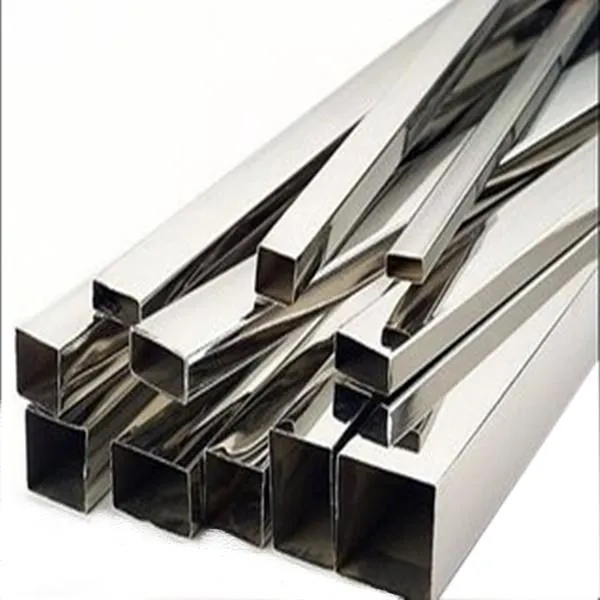
Stainless steel tubes are also a popular choice for outdoor furniture, such as chairs, tables, and loungers. Their UV resistance helps to prevent color fading, rusting, and the deterioration of the furniture's structure, allowing it to withstand the elements and provide long-lasting comfort and style. square pipe can be used to construct the frames of outdoor furniture, providing a strong and stable base.
Industrial Applications
In industrial settings, stainless steel tubes are used in a variety of applications, including piping systems, heat exchangers, and equipment frames. In outdoor industrial environments, the UV resistance of these tubes is essential for preventing corrosion and maintaining the efficiency and reliability of the equipment. stainless steel tubing can be used in applications where a high level of corrosion resistance and UV protection is required.
Why Choose Our Stainless Steel Tubes for UV-Resistant Applications
As a supplier of stainless steel tubes, we are committed to providing our customers with high-quality products that offer excellent UV resistance.
Quality Assurance
We source our stainless steel from reputable manufacturers and subject our tubes to rigorous quality control tests to ensure that they meet the highest standards. Our tubes are made from the finest grades of stainless steel, with the appropriate alloy composition and surface finish to provide optimal UV resistance.
Customization Options
We understand that different applications have different requirements. That's why we offer a wide range of customization options, including different sizes, shapes, and surface finishes. Whether you need a specific diameter of Stainless Steel Welded Tube or a unique design for your outdoor furniture, we can work with you to meet your needs.
Technical Support
Our team of experts is available to provide you with technical support and advice on choosing the right stainless steel tubes for your application. We can help you understand the factors that affect UV resistance and recommend the best solutions based on your specific requirements.
Contact Us for Your Stainless Steel Tube Needs
If you're looking for high-quality stainless steel tubes with excellent UV resistance, we'd love to hear from you. Whether you're an architect, a furniture manufacturer, or an industrial engineer, we have the products and expertise to meet your needs. Contact us today to discuss your project and get a quote.
References
- ASM Handbook Committee. (2004). ASM Handbook, Volume 13A: Corrosion: Fundamentals, Testing, and Protection. ASM International.
- Fontana, M. G. (1986). Corrosion Engineering (3rd ed.). McGraw-Hill.
- Kosec, P., & Kosec, M. (2007). Corrosion of Stainless Steels. Elsevier.