





The modulus of elasticity, also known as Young's modulus, is a fundamental property of materials that describes their stiffness or ability to resist deformation under an applied load. In the context of stainless steel tubes, understanding the modulus of elasticity is crucial for engineers, designers, and end - users alike, as it directly impacts the performance and suitability of these tubes for various applications. As a reliable stainless steel tube supplier, I am well - versed in the technical aspects of these products and am eager to share in - depth knowledge about the modulus of elasticity of stainless steel tubes.
What is the Modulus of Elasticity?
The modulus of elasticity (E) is defined as the ratio of stress (σ) to strain (ε) within the elastic range of a material. Mathematically, it is expressed as (E=\frac{\sigma}{\varepsilon}), where stress is the force applied per unit area ((\sigma=\frac{F}{A}), with (F) being the applied force and (A) the cross - sectional area), and strain is the relative deformation of the material ((\varepsilon=\frac{\Delta L}{L_0}), where (\Delta L) is the change in length and (L_0) is the original length).
This property is measured in units of pressure, typically gigapascals (GPa) in the SI system. A high modulus of elasticity indicates that a material is stiffer and will deform less under a given load, while a low modulus means the material is more flexible and will undergo greater deformation.
Modulus of Elasticity of Stainless Steel Tubes
Stainless steel is an alloy composed primarily of iron, with a minimum of 10.5% chromium, which provides its corrosion - resistant properties. Different grades of stainless steel have slightly different compositions, and this can affect their modulus of elasticity.
Most common grades of stainless steel tubes, such as 304 and 316, have a modulus of elasticity in the range of approximately 190 - 200 GPa. For example, Type 304 stainless steel, which is widely used in a variety of applications due to its good corrosion resistance and formability, has a modulus of elasticity around 193 GPa. Type 316 stainless steel, known for its enhanced corrosion resistance in harsh environments, also has a similar modulus of elasticity, typically around 195 GPa.
The relatively high modulus of elasticity of stainless steel tubes makes them suitable for applications where stiffness and resistance to deformation are important. For instance, in structural applications, such as building frames or support columns, stainless steel tubes can maintain their shape under heavy loads without significant bending or buckling.
Factors Affecting the Modulus of Elasticity in Stainless Steel Tubes
While the basic composition of stainless steel largely determines its modulus of elasticity, several other factors can have an impact:
Temperature
The modulus of elasticity of stainless steel tubes decreases with increasing temperature. As the temperature rises, the atomic bonds in the material become weaker, allowing the atoms to move more freely. This results in a reduction in the material's stiffness. For example, at elevated temperatures, the modulus of elasticity of stainless steel can drop by a significant amount, which needs to be considered in applications where the tubes will be exposed to high - temperature environments, such as in heat exchangers or industrial furnaces.

Cold Working
Cold working, which involves deforming the stainless steel tube at room temperature through processes like rolling or drawing, can increase the strength of the material. However, it has a relatively minor effect on the modulus of elasticity. In general, cold working may cause a slight increase in the modulus of elasticity due to the rearrangement of the crystal structure, but this change is usually within a few percentage points.
Microstructure
The microstructure of stainless steel, which can be influenced by factors such as heat treatment and alloying elements, can also affect the modulus of elasticity. For example, the presence of different phases in the stainless steel, such as ferrite or austenite, can lead to variations in the modulus. Austenitic stainless steels, which are non - magnetic and have excellent formability, typically have a consistent modulus of elasticity within their grade range.
Importance of the Modulus of Elasticity in Applications
The modulus of elasticity plays a vital role in determining the performance of stainless steel tubes in various applications:
Structural Applications
In construction and engineering, the modulus of elasticity is used to calculate the deflection and stress distribution in stainless steel tubes under load. Engineers use this property to design structures that can safely support the intended loads without excessive deformation. For example, in a bridge structure, the modulus of elasticity of the stainless steel tubes used in the framework is considered to ensure that the bridge can withstand the weight of traffic and environmental forces without collapsing or deforming beyond acceptable limits.
Fluid Transport
In applications where stainless steel tubes are used for fluid transport, such as in plumbing or chemical processing plants, the modulus of elasticity affects the tube's ability to resist internal pressure. A tube with a higher modulus of elasticity can better withstand the pressure exerted by the fluid flowing through it without bursting or deforming. This is crucial for ensuring the safety and reliability of the fluid - transport system.
Our Stainless Steel Tube Offerings
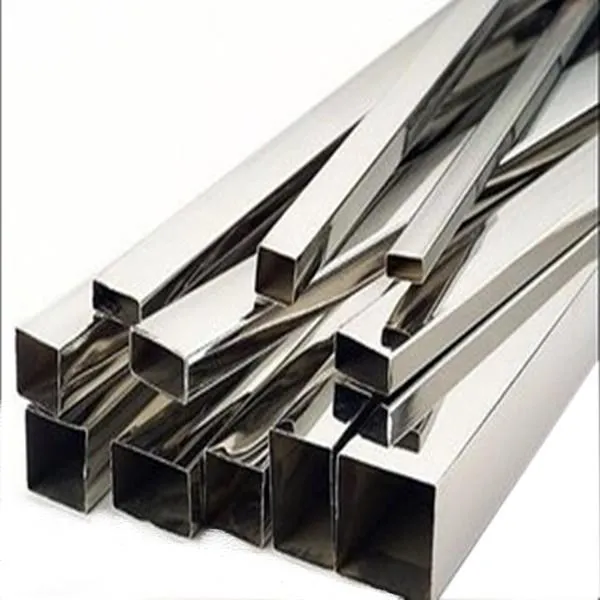
As a leading stainless steel tube supplier, we offer a wide range of products to meet the diverse needs of our customers. Our product portfolio includes square pipe, stainless steel tubing, and Stainless Steel Welded Tube.
We ensure that all our stainless steel tubes are manufactured to the highest quality standards, with consistent and reliable properties, including the modulus of elasticity. Our team of experts can provide detailed technical information about the modulus of elasticity and other properties of our products to help you make informed decisions for your specific applications.
Conclusion
The modulus of elasticity is a critical property of stainless steel tubes that influences their performance in a wide range of applications. As a stainless steel tube supplier, we understand the importance of this property and strive to provide high - quality products with consistent and reliable modulus of elasticity values. Whether you are an engineer, designer, or end - user, having a good understanding of the modulus of elasticity can help you select the most suitable stainless steel tubes for your project.
If you are interested in our stainless steel tube products or have any questions about the modulus of elasticity or other technical aspects, please feel free to contact us. We are ready to assist you with your procurement needs and provide professional advice.
References
- ASM Handbook Volume 1: Properties and Selection: Irons, Steels, and High - Performance Alloys. ASM International.
- Callister, W. D., & Rethwisch, D. G. (2017). Materials Science and Engineering: An Introduction. Wiley.
- Stainless Steel World Magazine. Various articles on stainless steel properties and applications.