




Hey there! As a supplier of Sanitary Clamped Seals, I've been getting a lot of questions lately about the rebound resilience of these seals. So, I thought I'd take a moment to break it down and explain what it is, why it matters, and how it affects the performance of our products.
What is Rebound Resilience?
Let's start with the basics. Rebound resilience is a measure of how well a material can return to its original shape after being deformed. In the context of a sanitary clamped seal, this means how well the seal can bounce back after being compressed between two surfaces. When you clamp a seal in place, it gets squeezed, and its shape changes. The rebound resilience determines how quickly and completely it goes back to its original form once the clamping force is removed.
Think of it like a rubber ball. When you squeeze a rubber ball, it flattens out. But as soon as you let go, it pops back into its round shape. That's rebound resilience in action. The same principle applies to our sanitary clamped seals.
Why Does Rebound Resilience Matter?
Now, you might be wondering why rebound resilience is such a big deal. Well, it's all about maintaining a proper seal. A sanitary clamped seal is used to prevent leaks and contamination in various applications, such as food and beverage processing, pharmaceutical manufacturing, and biotech. If the seal doesn't have good rebound resilience, it won't be able to maintain a tight seal over time.
Here's how it works. When a seal is compressed, it forms a barrier between two surfaces. This barrier stops liquids, gases, and other substances from leaking through. But if the seal doesn't rebound properly, it can develop gaps or lose its shape. These gaps can allow contaminants to enter the system, which can lead to product spoilage, equipment damage, and even health risks.
For example, in a food processing plant, a leaky seal can let bacteria and other pathogens into the product, causing it to spoil. In a pharmaceutical manufacturing facility, a contaminated seal can compromise the quality and safety of the drugs being produced. That's why having a seal with high rebound resilience is crucial for ensuring the integrity of the system.
Factors Affecting Rebound Resilience
Several factors can affect the rebound resilience of a sanitary clamped seal. One of the most important factors is the material used to make the seal. Different materials have different levels of rebound resilience. For example, silicone rubber is known for its excellent rebound resilience, while some types of elastomers may have lower rebound properties.
The temperature and pressure conditions in the application also play a role. High temperatures can cause the material to soften and lose its rebound ability, while high pressures can compress the seal too much, making it difficult for it to bounce back. That's why it's important to choose a seal material that is suitable for the specific temperature and pressure requirements of the application.
Another factor is the design of the seal. The shape and dimensions of the seal can affect how it compresses and rebounds. A well-designed seal will distribute the clamping force evenly, allowing it to maintain its shape and rebound effectively.


Our Sanitary Clamped Seals and Rebound Resilience
At our company, we understand the importance of rebound resilience in sanitary clamped seals. That's why we use high-quality materials and advanced manufacturing techniques to ensure that our seals have excellent rebound properties.
We offer a wide range of sanitary clamped seals made from different materials, including silicone, EPDM, and Viton. Each material has its own unique properties, so you can choose the one that best suits your application. For example, if you need a seal that can withstand high temperatures, our silicone seals are a great choice. If you're looking for a seal that is resistant to chemicals, our Viton seals might be more suitable.
In addition to the material, we also pay close attention to the design of our seals. Our engineers use the latest software and tools to optimize the shape and dimensions of the seals, ensuring that they provide a tight and reliable seal. We also conduct extensive testing to verify the rebound resilience and other performance characteristics of our seals.
Related Products
If you're in the market for sanitary pipe fittings, we also offer a variety of products that work well with our sanitary clamped seals. For example, our Stainless Steel Clamp Male Adaptor is a great option for connecting pipes and other components. It's made from high-quality stainless steel, which is resistant to corrosion and easy to clean.
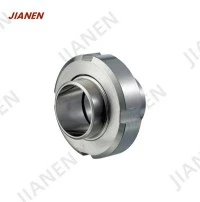
Another product we recommend is our ss union coupling. This coupling is designed to provide a secure and leak-free connection between two pipes. It's easy to install and remove, making it ideal for applications where frequent disassembly is required.
And if you need a seal that can be used with NPT threads, our NPT MALE Clamped Adapter is a great choice. It's compatible with a wide range of NPT fittings and provides a reliable seal.
Contact Us for Your Sanitary Clamped Seal Needs
If you're interested in learning more about our sanitary clamped seals or any of our other products, please don't hesitate to contact us. We have a team of experts who can help you choose the right seal for your application and answer any questions you may have.
Whether you're a small business or a large corporation, we're committed to providing you with the highest quality products and the best customer service. We believe that by working together, we can help you achieve your goals and ensure the success of your operations.
So, if you're in the market for sanitary clamped seals or related products, give us a call or send us an email today. We look forward to hearing from you!
References
- "Elastomer Handbook: Materials, Properties, and Applications" by Werner Hofmann
- "Sealing Technology Handbook" by John H. Bickford
- Various industry standards and guidelines related to sanitary seals and pipe fittings.