






What Is an AI Liquid Cooling System?
An AI liquid cooling system is a thermal management solution designed to remove heat from high-performance AI servers, GPUs, CPUs, and other data center equipment.
As AI computing density and power consumption increase, traditional air cooling may not provide sufficient cooling capacity. AI data center liquid cooling uses a circulating coolant to absorb and transfer heat more efficiently.
Cooling Distribution Units (CDUs)
Cold plates
Pumps
Heat exchangers
Liquid cooling manifolds
Pipes and tubing
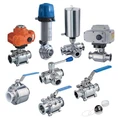
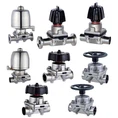
Valves and fittings
Together, these components create a closed-loop cooling system for AI and high-performance computing applications.

How Does an AI Liquid Cooling System Work?
An AI liquid cooling system typically works through four steps:
01
Coolant Distribution
Coolant is delivered through pipes, manifolds, valves, and fittings to the cooling equipment.
02
Heat Absorption
The coolant absorbs heat from high-power components such as GPUs and CPUs through cold plates or other cooling devices.
03
Heat Transfer
The heated liquid flows to a CDU or heat exchanger, where the collected heat is transferred away from the cooling loop.
04
Recirculation
After cooling, the liquid returns to the system and continues circulating to provide stable thermal management.

Why Is Liquid Cooling Important for AI Data Centers?
AI servers generate significant amounts of heat due to high-performance processors and GPU clusters. Liquid cooling can provide:
- Efficient heat removal
- Support for high-density AI servers
- More stable operating temperatures
- Reduced dependence on airflow
- Improved energy efficiency potential
-
The Role of Stainless Steel Components
Reliable piping infrastructure is essential for an AI liquid cooling system.
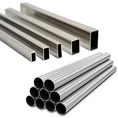
Stainless steel pipes, fittings, elbows, manifolds, and valves can provide strong mechanical performance, corrosion resistance, and long-term durability.
-

Materials such as 304 and 316L stainless steel may be selected based on coolant compatibility and system requirements.
Key components include:
- Stainless steel pipes
- 45° and 90° elbows
- Tees and reducers
- Liquid cooling manifolds
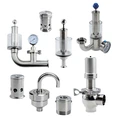
- Ball valves and butterfly valves
- Flanges and adapters
-
Conclusion
AI liquid cooling system removes heat by circulating coolant through a controlled cooling network.
As AI servers become more powerful, reliable AI data center cooling infrastructure is increasingly important.
High-quality stainless steel sanitary pipes, fittings, valves, and manifolds can help support reliable coolant flow, system durability, and long-term operation.

FAQ
What is an AI liquid cooling system?
It is a cooling system that uses circulating liquid to remove heat from AI servers, GPUs, CPUs, and other high-performance computing equipment.
How does AI liquid cooling work?
Coolant absorbs heat from computing components, transfers the heat to a CDU or heat exchanger, and then returns to the system for continuous circulation.
Why do AI data centers use liquid cooling?
Liquid cooling can handle higher heat loads and support the increasing power density of modern AI servers and GPU clusters.
What components are used in AI liquid cooling systems?
Common components include CDUs, cold plates, pumps, heat exchangers, liquid cooling manifolds, stainless steel pipes, valves, and fittings.