


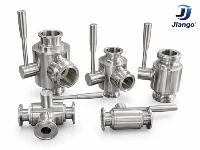
In sanitary processing systems, the sanitary valve seal plays an important role in maintaining reliable sealing, hygiene, and long-term performance.
EPDM, FKM, and PTFE are three commonly used sealing materials, but each has different properties and application advantages.

-
EPDM
EPDM offers excellent resistance to hot water, steam, and many cleaning solutions. It is widely used in food, beverage, dairy, and CIP/SIP systems where frequent cleaning and sterilization are required.
-
FKM
FKM is known for its strong resistance to oils, fuels, and many chemicals, as well as good high-temperature performance. It is a suitable choice for applications where chemical resistance is more important than steam resistance.
-
PTFE
PTFE provides excellent chemical resistance, low friction, and a wide temperature operating range. It is often selected for demanding pharmaceutical, chemical, and other applications involving aggressive media.

The right seal should be selected according to the actual operating conditions, including:
- Process medium
- Operating temperature and pressure
- CIP/SIP requirements
- Chemical exposure
- Cleaning frequency
- Industry and hygiene requirements
- Valve type (sanitary butterfly valve / Tri clamp butterfly valve / hygienic ball valve)
There is no single seal material that is ideal for every application.
Selecting the correct EPDM, FKM, or PTFE seal can help reduce leakage, extend valve service life,
and improve overall system reliability, especially in high performance butterfly valves and hygienic flow control systems.
For sanitary butterfly valves,
JIANEN provides stainless steel hygienic valve solutions with seal options designed for different processing requirements,
helping customers achieve reliable and hygienic fluid control in food, beverage, dairy, pharmaceutical, and chemical industries.