


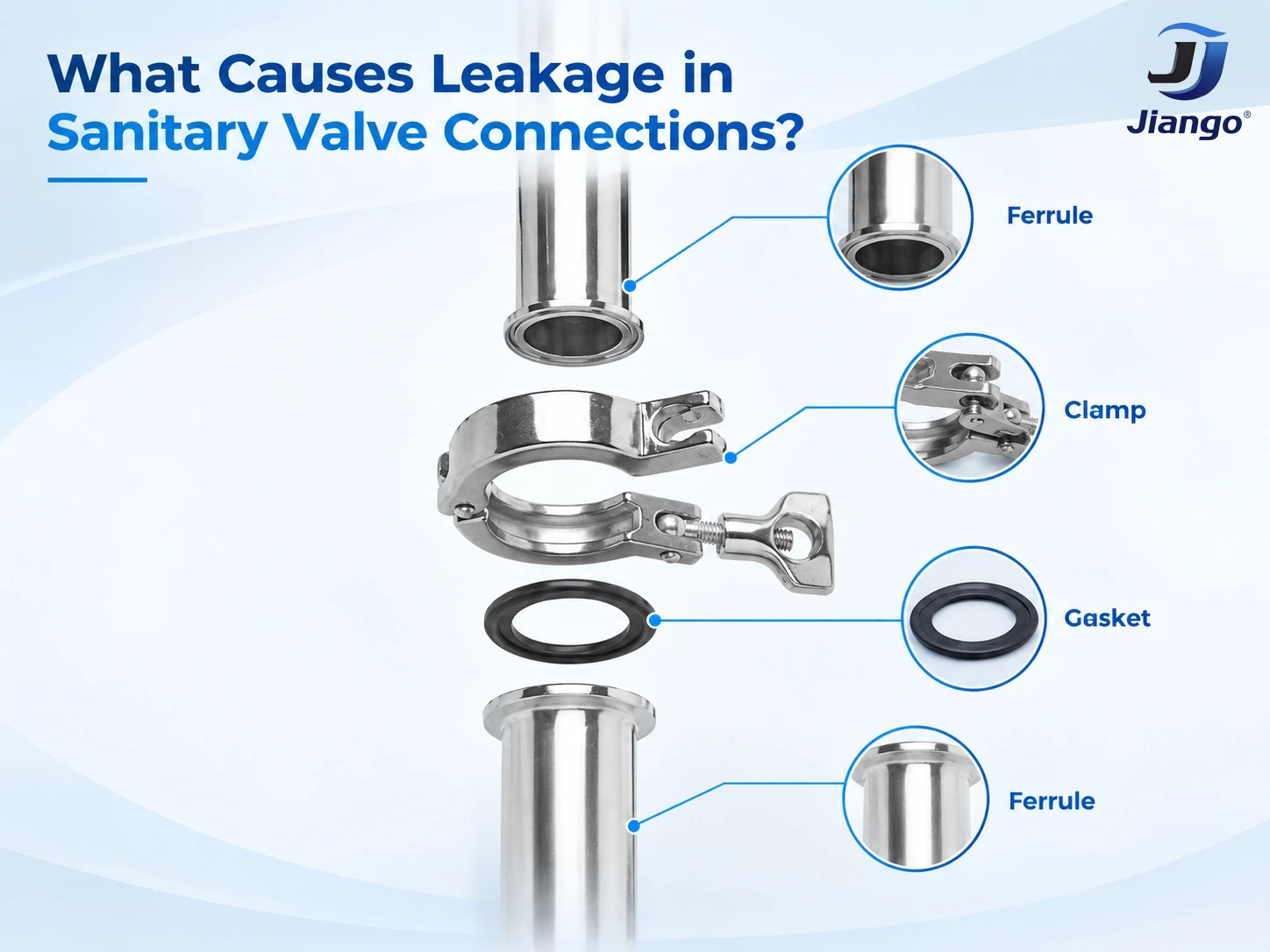
Leaks at sanitary valve connections can compromise system reliability and hygiene standards, while also increasing maintenance costs.
Identifying the root cause of a leak helps prevent such issues from recurring in stainless steel piping systems.
If a gasket is worn, cracked, deformed, or incompatible with the process medium, it will fail to provide an effective seal.
It is essential to select a gasket material suitable for the specific process medium, temperature, and operating conditions.
Insufficient tightening can lead to a poor seal, while over-tightening may deform the gasket
or even damage other components. Always follow the installation procedures recommended by the manufacturer.
Scratches, dents, contaminants, or surface irregularities on the sealing faces can create pathways for leaks.
Always inspect the connecting surfaces and ensure they are clean before assembly.
Misalignment at a connection can cause uneven pressure on the gasket.
Furthermore, pressure fluctuations or operating conditions that exceed the rated limits of the components can also trigger leaks.
- Inspect gaskets and sealing surfaces prior to installation.
- Ensure proper alignment and that all components are compatible with one another.
- Tighten clamps according to the manufacturer's recommendations.
- Ensure that operating pressure and temperature remain within specified limits.
Conclusion
A reliable sanitary valve connection depends on the correct selection of gaskets, proper assembly, clean sealing surfaces, and appropriate operating conditions.
Regular inspections help reduce the risk of leaks and ensure the system maintains high hygienic standards.
JIANEN offers a wide range of stainless steel sanitary valves, clamps, fittings, and piping designed for sanitary fluid handling systems.