


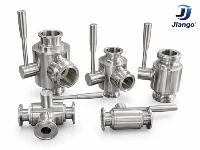

Sanitary Gasket play a vital but often overlooked role in industrial manufacturing where cleanliness and safety are paramount. In industries such as food and beverage, pharmaceuticals and biotechnology, where even the slightest contamination can have serious consequences, hygienic gasket quietly play a huge role. But what exactly are hygienic gasket and why are they so important? Let's take an in-depth look at sanitary gasket.
Hygienic gaskets are specialized seals used to connect pipes, tanks, and equipment in systems that handle liquids, gases, or semi-solids. Unlike standard gaskets, they are designed to meet strict hygiene standards, ensuring that no contaminants, bacteria, or particles can compromise the integrity of the system. They are commonly used in industries where purity and cleanliness are non-negotiable.

Why Are They Important?

In industries like food processing, pharmaceutical manufacturing, and biotechnology, even the smallest contamination can lead to product recalls, health risks, or regulatory violations. Hygienic gaskets act as barriers, preventing leaks, bacterial growth, and cross-contamination. For example, in a dairy processing plant, a faulty gasket could allow bacteria to grow, spoiling the product and potentially endangering consumers. In pharmaceutical production, a contaminated gasket could compromise the safety of life-saving medications.
The materials used in hygienic gaskets are carefully selected for their durability,
cleanliness, and resistance to harsh conditions.
Common materials include:
- Such as EPDM (ethylene propylene diene monomer) and silicone,
which are flexible, heat-resistant, and compatible with a wide range of chemicals.
- PTFE Known for its non-stick properties and resistance to aggressive chemicals,
PTFE is ideal for applications requiring extreme cleanliness.
- Stainless Steel Often used as a reinforcing material, stainless steel provides
strength and durability while resisting corrosion.
Food and Beverage
Petroleum chemical industry
Biotechnology
Machinery Manufacturing
Pharmaceuticals