

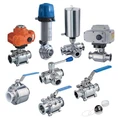

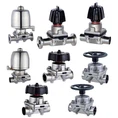
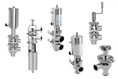

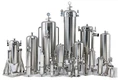


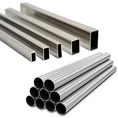
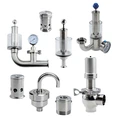


Stainless steel valve sanitary
Structural principle of sanitary butterfly valve:
the valve plate is set in the valve body, the end of the valve body close to the valve plate is provided with a butterfly valve flange, a flange sealing ring is set between the butterfly valve flange and the welding flange, and is fixedly connected through outer hexagon bolts and nuts
The upper and lower ends of the valve plate are respectively provided with an upper valve rod and a lower valve rod, the side wall of the upper valve rod and the valve body are successively provided with a valve plate sealing ring and a valve plate sleeve upward, and the side wall of the lower valve rod and the valve body are successively provided with a valve plate sealing ring and a valve plate sleeve downward,
A spring is sleeved on the side wall of one end of the handle rod and arranged in the handle head. One side of the handle head is fixedly connected with the handle head sleeve, which is fixedly connected with the upper valve rod through the handle screw, and a check valve is arranged on the side away from the valve plate in the valve body.
The beneficial effects are: make the opening and closing of the butterfly valve easy, convenient, effectively prevent the backflow of the medium, connect more tightly, seal better, and increase the practicability and innovation.
Size:0.5"-12,DN15-DN300"


Valve Sanitary: Ensuring Hygienic and Efficient Fluid Control in Sanitary Applications
In the sanitary and food processing industries, hygiene and cleanliness are paramount. Any compromise in these aspects can lead to contamination and the spread of pathogens, ultimately affecting product quality and consumer health. One of the key components that play a crucial role in maintaining these standards is the sanitary valve. This article explores the importance of sanitary valves, their design considerations, and their applications in various sanitary processes.
Importance of Sanitary Valves
Sanitary valves are specifically designed for use in hygienic environments, where the prevention of contamination and the maintenance of cleanliness are essential. These valves are typically made of corrosion-resistant materials such as stainless steel and are equipped with smooth surfaces and crevice-free designs to minimize the accumulation of food particles or bacteria. They are also easy to clean and disinfect, ensuring that the fluid flowing through them remains uncontaminated.
Design Considerations
The design of sanitary valves is focused on hygiene, cleanliness, and ease of operation. Some of the key design considerations include:
Material Selection: Stainless steel is the preferred material for sanitary valves due to its corrosion resistance, durability, and ease of cleaning. Other materials such as plastic or rubber may be used in specific applications, but they must be food-grade and comply with relevant hygiene standards.
Smooth Surfaces: The valve surfaces are designed to be smooth and free of crevices to minimize the accumulation of food particles or bacteria. This helps reduce the risk of contamination and simplifies cleaning procedures.
Ease of Disassembly and Assembly: Sanitary valves are designed to be easily disassembled and reassembled for cleaning and maintenance purposes. This allows for thorough cleaning and inspection of all valve components.
Connection Types: Sanitary valves are available with different connection types, such as clamp, threaded, or welded connections. The choice of connection type depends on the specific application and the requirements for hygiene and cleanliness.
Applications
Sanitary valves find applications in various sanitary and food processing processes, including:
Beverage Processing: In the beverage industry, sanitary valves are used to control the flow of liquids, syrups, and other ingredients. They ensure that the products remain uncontaminated during processing and packaging.
Dairy Processing: Dairy products require strict hygiene standards to prevent contamination. Sanitary valves are used in dairy processing plants to control the flow of milk, cream, yogurt, and other dairy products.
Pharmaceutical Manufacturing: In the pharmaceutical industry, sanitary valves are used in the manufacturing of sterile products. They ensure that the products remain uncontaminated during the production process and meet the required hygiene standards.
Personal Care Products: Sanitary valves are also used in the production of personal care products such as shampoos, soaps, and lotions. They help maintain the cleanliness and hygiene of these products during production.
In conclusion, sanitary valves play a crucial role in ensuring the hygiene and cleanliness of products in the sanitary and food processing industries. Their design considerations and applications make them an essential component in maintaining product quality and consumer health.
Hot Tags: valve sanitary, China, manufacturers, suppliers, factory, buy, price, pressure relief valve, sanitary offshore valve, sanitary inspection line valve, sanitary dock valve, sanitary accurate valve, sanitary flow rate valve


