

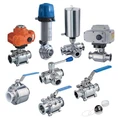

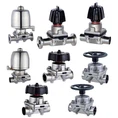
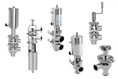

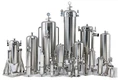





Stainless steel tri clamp valve
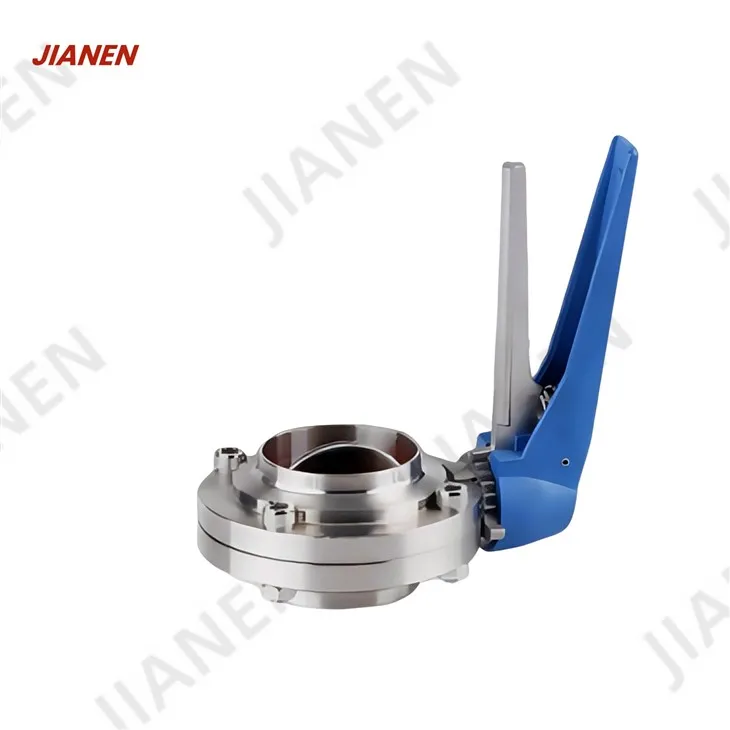
tri clamp valve is a fluid sanitary butterfly valve used in the food and beverage industry.
Butterfly valve is used for the connection or control of the transmission pipeline of fluid and semi fluid materials in the food and beverage industry. it can effectively ensure the sanitary quality of materials in the transmission process. At the same time, it is also easy to clean and disinfect, so as to keep the pipeline clean and hygienic
Material : It is made of SUS304 and 316L, which can meet the special requirements of various media in the field of food and biopharmaceutical.
Feature:
Its smooth, seamless and automatic empty hand process fluid channel is also very suitable for the needs of steam stepping on it for on-site cleaning.
In the manufacturing process, the temporary quality control is carried out in strict accordance with the requirements of FDA.
Valve Handle: Two position handle, three-position handle, four-position pull handle,multi-position stainless steel handle


After installing the Tri Clamp Valve, you can check for leaks using several methods. Here are some common leak detection methods:
Bubble method: After pressurizing the valve with gas, submerge it in a liquid. Gas will escape through any leaks, forming bubbles in the surrounding liquid. The location of the bubbles indicates the leak's position.
Soap bubble method: After pressurizing the valve with gas, apply a soap solution to potential leak points. The formation of soap bubbles indicates a leak. This method usually involves manually observing and judging the size of the bubbles.
Special tracking substance method: Introduce a fluid containing a special tracking substance into the valve. When this substance escapes through a leak, use a detection device to locate the leak. Common tracking substances include sodium, which can be detected using specific sensors.
Water pressure method: First, fill the valve with water, then pressurize it. Observe if water leaks from any part of the valve.
Ultrasonic detection method: Use an ultrasonic detector to check for leaks based on the instrument's readings. Inverter technology can convert ultrasonic signals into sounds that human ears can hear. For steam safety valves, spectrum/amplitude display analysis software can help observe changes in ultrasonic signals to detect steam leaks.
Pressurizing method: Connect a compressor to the valve and pressurize it. After reaching a certain pressure, stop pressurizing, close the valve, and monitor it for a period. A sharp pressure drop indicates a significant leak, while minimal or no pressure change suggests a small leak or no leak. A pressure gauge is typically used to observe pressure changes.
Internal valve leakage detector: Attach the instrument to the system's upstream pipeline and adjust its sensitivity to determine the background signal. Then, listen for leak signals in the downstream pipeline. An increase in the downstream dB reading compared to the upstream indicates a leak. Finally, confirm the leak location by attaching the detector to other downstream positions.
Hot Tags: tri clamp valve, China, manufacturers, suppliers, factory, buy, price, 2 pc clamp ball valve, Stainless Steel Clamped Butterfly Valve, tank Sampling valve, pressure relief valve, Clamped End Check Valve, mix seat valve


