




Can the KF - 25 Clamp be used in chemical environments?
As a supplier of KF - 25 Clamps, I often encounter inquiries from customers regarding the suitability of these clamps for chemical environments. This is a crucial question, as the wrong choice of clamp in a chemical setting can lead to equipment failure, safety hazards, and increased maintenance costs. In this blog, I will delve into the characteristics of KF - 25 Clamps and analyze whether they can be effectively used in chemical environments.
Understanding the KF - 25 Clamp
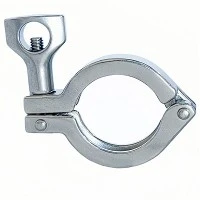
The KF - 25 Clamp is a type of quick - flange clamp that is widely used in vacuum systems and other industrial applications. It is designed to provide a secure and leak - tight connection between two components. The clamp typically consists of a metal body, usually made of stainless steel, and a sealing element, often an elastomer O - ring.


The KF - 25 Clamp has several advantages. It is easy to install and remove, which makes it convenient for maintenance and component replacement. It also offers a relatively high clamping force, ensuring a stable connection between the flanges. Additionally, the design of the KF - 25 Clamp allows for quick disassembly and reassembly, which is essential in many industrial processes.
Chemical Environments: A Complex Challenge
Chemical environments can vary greatly in terms of the types of chemicals present, their concentrations, temperature, and pressure. Some common chemicals found in industrial settings include acids, bases, solvents, and corrosive gases. These chemicals can have a significant impact on the performance and durability of the KF - 25 Clamp.
Corrosion is one of the most significant challenges in chemical environments. Metals, such as the stainless steel used in KF - 25 Clamps, can react with certain chemicals, leading to the formation of rust or other corrosion products. This can weaken the clamp, reduce its clamping force, and eventually cause it to fail. For example, in an environment with high concentrations of hydrochloric acid, the stainless steel may undergo pitting corrosion, which can compromise the integrity of the clamp.
Another factor to consider is the compatibility of the sealing element. The elastomer O - ring in the KF - 25 Clamp can be affected by chemicals. Some chemicals can cause the O - ring to swell, shrink, or become brittle, which can lead to leaks. For instance, certain solvents may dissolve or degrade the elastomer, rendering the seal ineffective.
Suitability of KF - 25 Clamps in Chemical Environments
The suitability of KF - 25 Clamps in chemical environments depends on several factors.
Material Selection
The choice of material for the KF - 25 Clamp is crucial. Stainless steel is a popular choice due to its relatively high corrosion resistance. However, not all stainless steels are created equal. Different grades of stainless steel have different levels of resistance to various chemicals. For example, 316 stainless steel is more resistant to corrosion in chloride - containing environments compared to 304 stainless steel. Therefore, when using KF - 25 Clamps in chemical environments, it is important to select the appropriate grade of stainless steel based on the specific chemicals present.
Sealing Element Compatibility
The compatibility of the sealing element with the chemicals in the environment is also essential. There are different types of elastomers available, each with its own chemical resistance properties. For example, Viton is known for its excellent resistance to a wide range of chemicals, including many solvents and fuels. EPDM, on the other hand, is more suitable for applications involving water, steam, and certain acids and bases. When choosing a KF - 25 Clamp for a chemical environment, it is necessary to select an O - ring made of a compatible elastomer.
Environmental Conditions
The temperature and pressure in the chemical environment can also affect the performance of the KF - 25 Clamp. High temperatures can accelerate the corrosion process and cause the elastomer to degrade more quickly. High pressures can increase the stress on the clamp, potentially leading to deformation or failure. Therefore, it is important to consider the temperature and pressure conditions when evaluating the suitability of the KF - 25 Clamp in a chemical environment.
Comparison with Other Clamps
When considering the use of clamps in chemical environments, it is also helpful to compare the KF - 25 Clamp with other types of clamps, such as triclover clamps and sanitary pipe clamps.
Triclover clamps are commonly used in the food and beverage industry, as well as in some chemical processing applications. They are known for their ease of use and good sealing performance. However, their chemical resistance may vary depending on the material and design. Sanitary pipe clamps are designed for applications where hygiene is a priority, such as in pharmaceutical and food processing. They are typically made of high - quality stainless steel and can offer good resistance to certain chemicals.
Stainless Steel Clamps in general are a popular choice for chemical environments due to their corrosion resistance. However, the specific design and features of the KF - 25 Clamp, such as its quick - flange design, may make it more suitable for certain applications compared to other types of clamps.
Case Studies
To further illustrate the suitability of KF - 25 Clamps in chemical environments, let's look at some case studies.
In a chemical manufacturing plant, KF - 25 Clamps made of 316 stainless steel with Viton O - rings were used in a system handling a mixture of organic solvents. After several months of operation, the clamps showed no signs of corrosion or leakage. The high - quality materials and proper selection of the sealing element ensured the long - term performance of the clamps in this chemical environment.
In another case, a laboratory used KF - 25 Clamps in a setup involving the handling of hydrochloric acid. Initially, the clamps were made of 304 stainless steel, and the O - rings were made of a standard elastomer. After a short period, the clamps started to show signs of corrosion, and the O - rings became brittle. By replacing the clamps with ones made of 316 stainless steel and using Viton O - rings, the problem was resolved, and the system continued to operate smoothly.
Conclusion
In conclusion, the KF - 25 Clamp can be used in chemical environments, but careful consideration must be given to material selection, sealing element compatibility, and environmental conditions. By choosing the appropriate grade of stainless steel and a compatible elastomer O - ring, the KF - 25 Clamp can provide a reliable and long - lasting connection in many chemical applications.
If you are in need of KF - 25 Clamps for your chemical environment, I encourage you to contact us for more information and to discuss your specific requirements. We have a wide range of KF - 25 Clamps available, and our team of experts can help you select the most suitable product for your application. Let's work together to ensure the success of your projects in chemical environments.
References
- ASM Handbook Volume 13A: Corrosion: Fundamentals, Testing, and Protection
- Elastomer Handbook: Properties, Applications, and Selection